
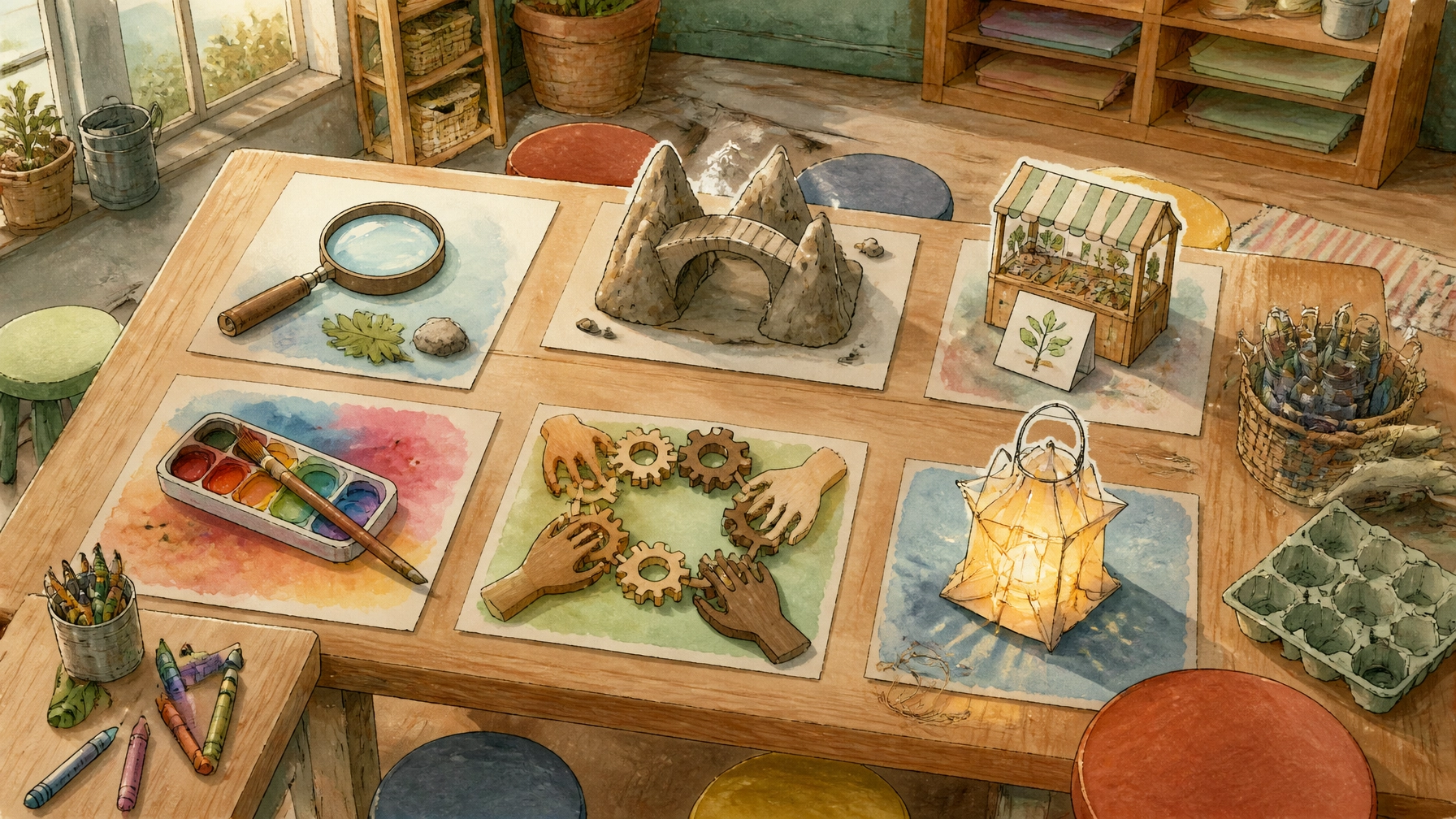
New Braunfels has always had a knack for blending tradition with fresh ideas. German-Texan heritage, river days, Hill Country creativity, and a growing appetite for new experiences all share the same zip code.
Now, that spirit is showing up in a new place: the classroom.
On August 17, 2026, New Braunfels ISD welcomed students to CREATE at County Line, the district’s first district-wide elementary magnet school. Located at the former County Line Elementary campus at 1200 County Line Road, CREATE is designed around hands-on, future-ready learning for elementary students.
The opening is a meaningful community development, not because every retiree is preparing to pack a lunchbox, but because schools help shape the character, opportunity, and connections of an entire town.
For retirees and pre-retirees considering the New Braunfels lifestyle, CREATE offers another window into how the community is growing: creatively, collaboratively, and with an emphasis on learning that reaches beyond a traditional worksheet.
What is CREATE at County Line?
CREATE serves students in kindergarten through second grade for the 2026–27 school year, with plans to add additional elementary grades in the future. The program is open to students across the New Braunfels ISD community.
According to NBISD’s official CREATE information, the campus was developed through a district strategic-planning process and input from a Parent Advisory Committee. The concept centers on students becoming active creators, problem-solvers, and participants in their education.
The district describes CREATE as a future-ready learning campus that combines core academics with multidisciplinary, project-based experiences. Students still learn required academic standards, but the way those lessons come alive may look different from a conventional classroom.
A science lesson might involve observing plants. A math concept might become part of a design challenge. A writing project could lead to a published class book. An exploration of community needs might inspire a student-created solution.
In other words, the classroom is not being asked to stay in its lane. It is being invited to explore the whole neighborhood.
The six pillars behind the CREATE experience
The word CREATE is more than a catchy name. Each letter represents one of the program’s six foundational pillars.
Curiosity
Curiosity is the willingness to ask, “What happens if we try this?”
For young students, that may mean examining how a seed grows, testing a structure, exploring a medical idea, or asking why a community works the way it does. Curiosity helps turn ordinary moments into invitations to investigate.
That quality matters well beyond childhood. Communities with curious residents tend to stay engaged, adaptable, and interested in what comes next, excellent traits for a fast-growing place like New Braunfels.
Resilience
Resilience is not about getting everything right the first time. It is about learning how to adjust, try again, and keep going when a project falls apart, which, in the world of elementary-school glue and cardboard, is practically a curriculum requirement.
CREATE’s hands-on approach gives students opportunities to experience small setbacks in a constructive setting. A design may need to be rebuilt. A team may need to rethink its plan. A presentation may take more than one attempt.
Those experiences can help children build confidence while learning that mistakes are not the end of the story.
Entrepreneurship
At CREATE, entrepreneurship is not limited to starting a company. It is about seeing a need, imagining a possibility, and taking initiative.
The district’s materials describe students as young entrepreneurs who can dream, design, and build alongside their community. That may involve working with local creators, developing ideas, and considering how a solution could help others.
For New Braunfels, this pillar fits naturally with the area’s independent businesses, makers, ranchers, artists, chefs, and service providers. Students can begin to see that a community is not simply a place where people live. It is a place where people contribute.
Artistry
Artistry gives students room to communicate through visual art, storytelling, performance, design, and creative expression.
This is particularly fitting in a community known for historic districts, music, craft, food, festivals, and Hill Country aesthetics. Artistry teaches children that creativity is not an extra feature added after the “important” work is finished. It can be part of how people solve problems, share ideas, and understand one another.
A child who learns to express an idea through a painting, a digital story, or a handmade object is also practicing observation and communication.
Teamwork
Many CREATE activities are built around collaboration. Students learn to listen, share responsibilities, explain their thinking, and make room for another person’s idea.
That may sound simple, but teamwork is one of those skills that becomes more valuable with age. It helps neighbors organize events, volunteers serve effectively, and communities work through complicated challenges without requiring everyone to think exactly alike.
CREATE’s approach gives students a chance to practice cooperation early, while the stakes are still mostly limited to whose turn it is to use the markers.
Empowerment
Empowerment means helping students understand that their ideas and actions matter.
The district’s CREATE curriculum includes experiences such as designing a green city, creating a time capsule, writing books, curating museums, and inventing solutions to real-world challenges. These projects give children a visible role in their learning and help them recognize that even young people can make a positive contribution.
That message can ripple outward. Students who feel heard may become more willing to participate in their schools, neighborhoods, and communities as they grow.
Six areas that make learning feel connected to real life
CREATE is designed to draw from several areas of exploration, including STEM, agriculture, culinary arts, outdoor learning, digital media, and medical exploration.
These are not isolated subjects placed into separate boxes. They can overlap in practical and memorable ways.

STEM can encourage students to design, test, measure, and improve. Agriculture can connect children with food, stewardship, plants, and the land around them. Culinary arts can introduce creativity, sequencing, culture, and practical problem-solving.
Outdoor learning allows lessons to move into gardens, courtyards, and natural settings. Digital media gives students new ways to tell stories and share ideas. Medical exploration can introduce age-appropriate concepts about health, care, and the people who help communities function.
The value is not that every child must become a scientist, chef, filmmaker, farmer, or healthcare professional. The value is exposure. Young students can discover interests they might not encounter through a single traditional subject.
NBISD’s official CREATE page describes this broader vision as “Learning Beyond Walls,” with hands-on projects, showcases, community experiences, and future-focused learning woven into the program.
Why retirees may want to pay attention
CREATE is an elementary school, but its community impact is not limited to families with school-age children.
Grandchildren create new points of connection
For retirees with grandchildren in the area, CREATE may offer a fresh way to understand what younger family members are learning and enjoying. Instead of asking only, “How was school today?” grandparents may hear about a green-city design, a classroom showcase, a digital project, or an outdoor discovery.
Those conversations can become more meaningful when older adults share their own experiences. A former engineer may have stories about building and testing. A retired nurse may offer perspective on caring professions. A gardener, chef, artist, entrepreneur, or business owner may have practical knowledge that fits beautifully into a hands-on learning environment.
No special title is required. Sometimes the most useful contribution is simply asking a thoughtful question.
Volunteering can be a two-way exchange
Schools often benefit from community volunteers, guest speakers, project mentors, and people willing to share skills. Retirees frequently bring time, patience, professional experience, and a willingness to encourage others.
A volunteer role should always be coordinated directly with the district or campus, and opportunities can change. The CREATE campus page lists current contact information, including the main office number at (830) 627-6610.
The best part of intergenerational volunteering is that it is not a one-directional transfer of wisdom. Younger students can bring energy, imagination, and questions that keep adults engaged, too.
Schools influence the feel of a growing town
When families evaluate a community, they look at more than houses and amenities. They also consider whether the area feels connected, forward-looking, and welcoming.
A school built around curiosity, teamwork, artistry, and empowerment adds another layer to New Braunfels’ identity. It suggests that growth is not only about adding buildings. It is also about creating places where people can learn from one another and participate in the future of the community.
As NBISD reported after the campus opening, Principal April Jones described CREATE’s mission as providing “an engaging and creative learning environment where every student is inspired to grow.”
That is an ambitious goal, and a community-wide one.

A small school story with a larger community message
CREATE at County Line is still at the beginning of its story. Its first students arrived in August, its teachers are shaping daily routines, and its projects will develop over time.
That makes this an especially interesting moment for New Braunfels residents. The school is not simply offering a different schedule or a new building identity. It is experimenting with how students can connect academic learning to creativity, community, and real-world discovery.
For retirees, that may mean watching grandchildren find a new interest. It may mean sharing a skill during a campus project. Or it may simply mean appreciating another example of New Braunfels investing in the people and ideas that will shape its future.
Mau Sanchez, founder of Retire in New Braunfels and principal at Mau Sanchez Capital, believes lifestyle decisions are about more than a floor plan or a map location. They are also about the communities people want to join and the relationships they hope to build.
If you are considering a move to New Braunfels, explore the district’s current information directly and take time to understand the broader rhythm of the community. For retirement income planning and investment management, Mau Sanchez Capital can help families think through the financial side of a major life transition. We favor client-specific portfolios built with transparent, liquid, publicly traded investments, proper asset allocation, and thoughtful risk management.
CREATE’s motto is “Where ideas ignite!” That is a fitting ambition for a school, and a pretty good description of New Braunfels these days.
Schedule a private meeting with a fiduciary financial advisor today by calling (512) 593-8380 or by visiting: https://calendly.com/portafoliocapital/15min
Portafolio Capital Management dba Mau Sanchez Capital is a Registered Investment Adviser. This content is for informational purposes only and does not constitute investment advice or a solicitation to buy or sell any security. Advisory services are provided only pursuant to a written advisory agreement.
This article may include stories, scenarios, and perspectives created or assisted by artificial intelligence. Although the individuals and circumstances described may be fictional, the topics are intended to reflect real financial, personal, and lifestyle issues that retirees and individuals commonly face.
The content is provided to encourage readers to consider different perspectives that may affect their retirement, regardless of whether they are currently planning, approaching retirement, or already retired. It is intended for general educational and informational purposes only and should not be interpreted as personalized investment, financial, tax, legal, medical, or retirement-planning advice.
Individual circumstances vary. Readers should independently verify any information presented and consult appropriately qualified professionals before making financial or personal decisions. No advisory, professional, or client relationship is created through the use of this website.
Leave a Reply