
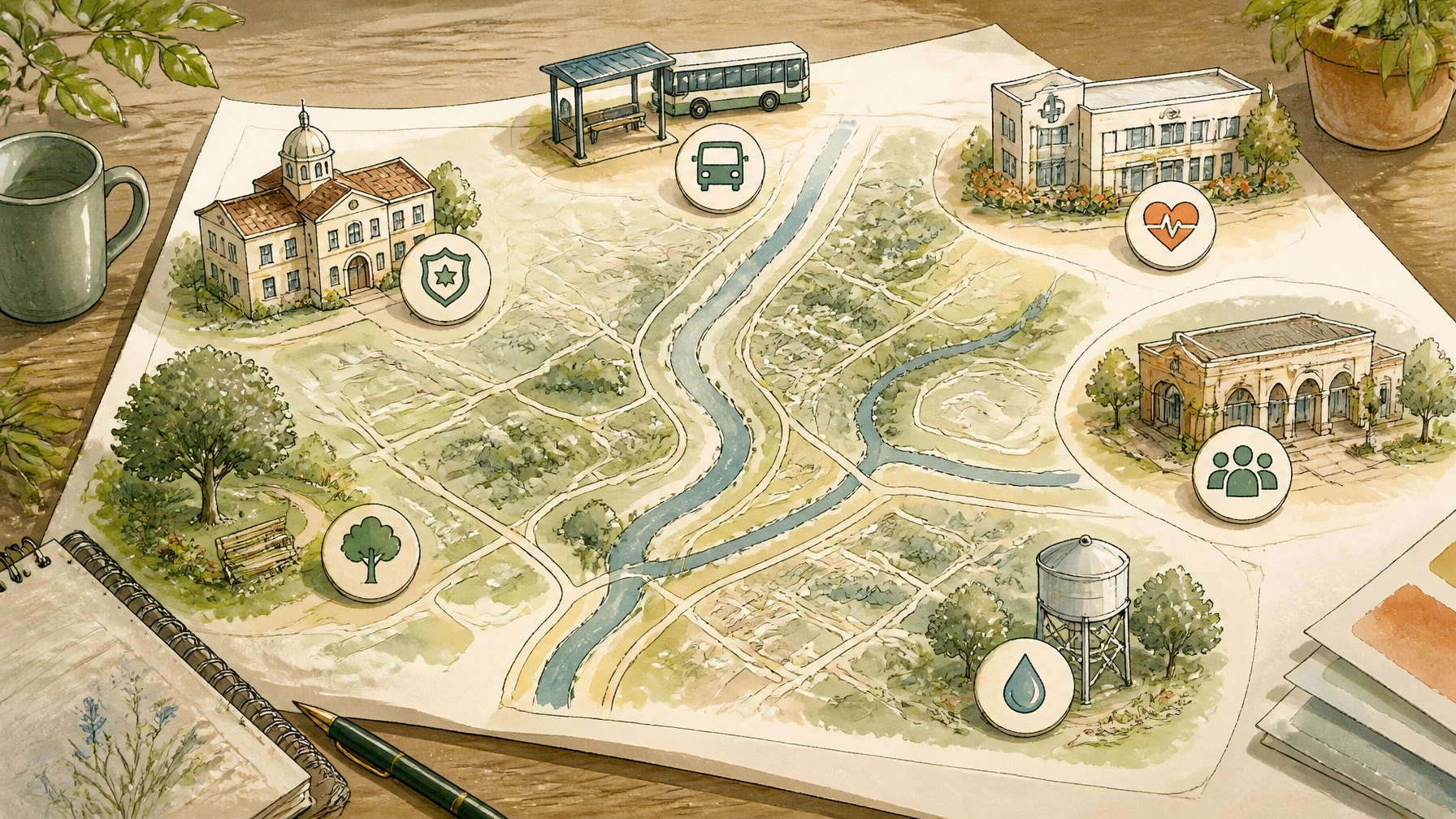
New Braunfels is known for its rivers, historic districts, outdoor recreation, and relaxed Hill Country pace. But a community’s quality of life depends on more than scenic views and a good place to grab breakfast.
It also depends on the less glamorous: but very important: things: accessible services, reliable transportation, supportive community facilities, and places that help residents remain connected through different stages of life.
That is the focus of the City of New Braunfels’ latest Better NB report, which looks at how nearly $11 million in federal American Rescue Plan Act funding was directed toward long-term community needs.
The investment is not a retirement program, and not every project directly benefits retirees. However, the broader themes: access, mobility, services, housing support, and community facilities: can influence how comfortable and connected a city feels for residents of all ages.
What Is ARPA?
The American Rescue Plan Act, commonly called ARPA, was passed by Congress in 2021 in response to the public health and economic effects of the COVID-19 pandemic.
Part of the legislation provided funding to state and local governments. New Braunfels received approximately $11 million through the U.S. Treasury’s Coronavirus State and Local Fiscal Recovery Funds program.
According to the City’s ARPA Information page, New Braunfels directed the funding toward broad areas that included:
- Utility assistance
- Administration and compliance
- Capital grants for nonprofit organizations
- Public transportation, traffic, and pedestrian mobility projects
The City’s reporting describes these as one-time funds intended to create lasting value. In the August 2026 Better NB feature, the City framed the effort around a “generational impact”: using temporary federal funding for improvements designed to serve the community well beyond the original emergency.
That is an important distinction. ARPA funding was not simply a general-purpose checkbook for everyday operations. Many of the projects involved facilities, construction, or improvements expected to have a useful life of more than a decade.
“When the City of New Braunfels received nearly $11 million through the federal American Rescue Plan Act (ARPA), it provided an opportunity to invest in projects that would improve the quality of life for generations to come.”
: City of New Braunfels, Better NB, August 2026

How These Investments Can Shape Daily Life
The impact of a public investment is not always obvious on the day it is announced. Sometimes it appears years later as a facility that expands services, a safer route across town, or a community organization with more room to help residents.
Here are several quality-of-life themes connected to the City’s ARPA reporting.
1. More capable community facilities
A number of ARPA-funded efforts involved nonprofit capital projects. These projects were designed to support organizations working in areas such as housing, youth services, shelter, counseling, and healthcare-related facilities.
The point is not that a new building automatically solves a complicated social challenge. It does not. But additional space, better facilities, and long-term improvements can help local organizations serve more people or provide services in a more suitable environment.
For retirees and pre-retirees, this may matter in several indirect ways. A city’s support network can influence how families respond to unexpected circumstances, how older adults remain connected to loved ones, and how easily residents find help when life takes an unplanned detour.
It can also matter to adult children who are weighing a move to New Braunfels while thinking about parents, grandchildren, or other family members.
2. Greater attention to access and mobility
The City’s ARPA information identifies public transportation, traffic, and pedestrian mobility as another major area of investment.
Mobility is a lifestyle issue, not just an infrastructure issue. A retirement community can have beautiful neighborhoods, but residents still need practical ways to reach medical appointments, grocery stores, cultural events, restaurants, parks, and friends.
Some people drive everywhere. Others prefer walking, public transportation, rides from family, or a combination of options. The more choices a community offers, the more adaptable daily life may become as circumstances change.
For someone considering a New Braunfels retirement, mobility is worth evaluating alongside a home’s floor plan and finishes. Ask:
- Is the property close to essential services?
- Are sidewalks and crossings comfortable to use?
- How easy is it to reach healthcare providers?
- Are there transportation options if driving becomes less appealing?
- Can visitors and family members navigate the area easily?
These questions do not predict the future. They simply help you look beyond the kitchen island: which, admittedly, is often very attractive.

3. Support for housing stability and essential services
The Better NB report highlights projects connected to housing and shelter. The City’s ARPA Information page provides additional background about the nonprofit capital grant program.
These efforts are aimed at residents facing housing instability and other serious challenges. They should not be confused with luxury retirement communities, active-adult developments, or the private housing market.
Still, housing stability is part of a healthy local ecosystem. When communities have organizations and facilities equipped to help people in crisis, the benefits may extend beyond the individuals receiving direct assistance. Families, volunteers, employers, neighbors, and service providers can all be affected by the strength of that network.
For people relocating to New Braunfels, it is useful to understand both sides of the housing conversation:
- The private market determines the homes and communities available for purchase or rent.
- Public and nonprofit investments help address needs that the private market may not meet on its own.
A balanced view makes it easier to appreciate the city as a whole rather than judging it only by property listings.
4. Continued attention to healthcare-related capacity
The City’s report also discusses healthcare-related projects, including facility improvements connected with training and rehabilitation services.
That does not mean every healthcare need is solved, or that every retiree will use a particular facility. Healthcare access remains something households may want to research carefully based on physicians, specialists, insurance arrangements, emergency services, and preferred care locations.
However, healthcare capacity is an important consideration when evaluating the long-term appeal of any retirement destination. Facilities that support training, rehabilitation, and community services can contribute to a broader environment in which residents have more resources nearby.
For those exploring the area, a general healthcare checklist can be useful when comparing neighborhoods. Factors such as travel times, appointment availability, hospital affiliations, and the types of services nearby can all play a role over time.
What “Generational Impact” Means for Retirees
The phrase can sound grand, but the idea is fairly practical.
A generational investment is one that remains useful after the original funding source is gone. It may be a renovated facility, a mobility improvement, or additional capacity at an organization serving the community.
For retirees, long-term value often shows up in everyday details:
- Being able to reach a park or civic facility more comfortably
- Having community organizations with the space to provide assistance
- Seeing family members benefit from youth and housing services
- Living in a city that plans for growth instead of reacting to every change
- Remaining connected to activities, services, and people outside the home
That last point is especially relevant in retirement. A slower pace does not have to mean a smaller life. New Braunfels offers a blend of nature, culture, dining, and community events, and the city’s public investments can help shape how accessible those experiences remain.
For more local lifestyle ideas, see our guides to senior center programs in New Braunfels and adapting to the city’s small-town pace of life.
How to Follow the Results
City projects can be difficult to track once the announcement fades from the news. Fortunately, New Braunfels provides several ways to stay informed.
Start with Better NB
The Better NB webpage is the City’s storytelling hub for case studies about initiatives, equipment, programs, and other efforts intended to improve local life.
The page explains that these articles are designed to show how City actions are helping make New Braunfels a better place to “live, work, and play.”
The August 2026 ARPA feature is available as a downloadable Better NB report.
Review the City’s ARPA information
The ARPA Information page contains program background and links to related materials. It is the best place to review the City’s stated categories and reporting rather than relying on social media summaries or secondhand commentary.
Watch meetings and project updates
City Council meetings, department updates, and public notices can provide information about timelines, changes, and completed work. If a particular project matters to you, look for updates from the department or organization responsible for it.
You do not need to become a municipal-budget hobbyist with color-coded binders. A few minutes of reading every so often can offer a clearer picture of how the community is evolving.

A Helpful Part of the Relocation Conversation
New Braunfels’ ARPA investments are only one piece of the city’s larger story. They do not replace private development, neighborhood research, healthcare due diligence, or thoughtful retirement income planning.
They do, however, provide another lens for understanding the place you may call home.
When comparing retirement destinations, look beyond scenery and amenities. Consider how a community supports access, mobility, facilities, and residents facing difficult circumstances. Those qualities may not appear in a real estate brochure, but they can influence the feeling of belonging and practicality over time.
If you are considering a move to New Braunfels or the Central Texas corridor, learn more about Mau Sanchez Capital or schedule a private conversation about the financial side of a relocation. At Mau Sanchez Capital, we specialize in helping families think through financial transitions, while qualified CPAs and estate planning attorneys can address tax or legal questions. Mau Sanchez is a Retirement Planner and Investment Manager, not a tax advisor or estate planning attorney.
Schedule a private meeting with a fiduciary financial advisor today by calling (512) 593-8380 or by visiting: https://calendly.com/portafoliocapital/15min
Portafolio Capital Management dba Mau Sanchez Capital is a Registered Investment Adviser. This content is for informational purposes only and does not constitute investment advice or a solicitation to buy or sell any security. Advisory services are provided only pursuant to a written advisory agreement.
This article may include stories, scenarios, and perspectives created or assisted by artificial intelligence. Although the individuals and circumstances described may be fictional, the topics are intended to reflect real financial, personal, and lifestyle issues that retirees and individuals commonly face.
The content is provided to encourage readers to consider different perspectives that may affect their retirement, regardless of whether they are currently planning, approaching retirement, or already retired. It is intended for general educational and informational purposes only and should not be interpreted as personalized investment, financial, tax, legal, medical, or retirement-planning advice.
Individual circumstances vary. Readers should independently verify any information presented and consult appropriately qualified professionals before making financial or personal decisions. No advisory, professional, or client relationship is created through the use of this website.
Leave a Reply