
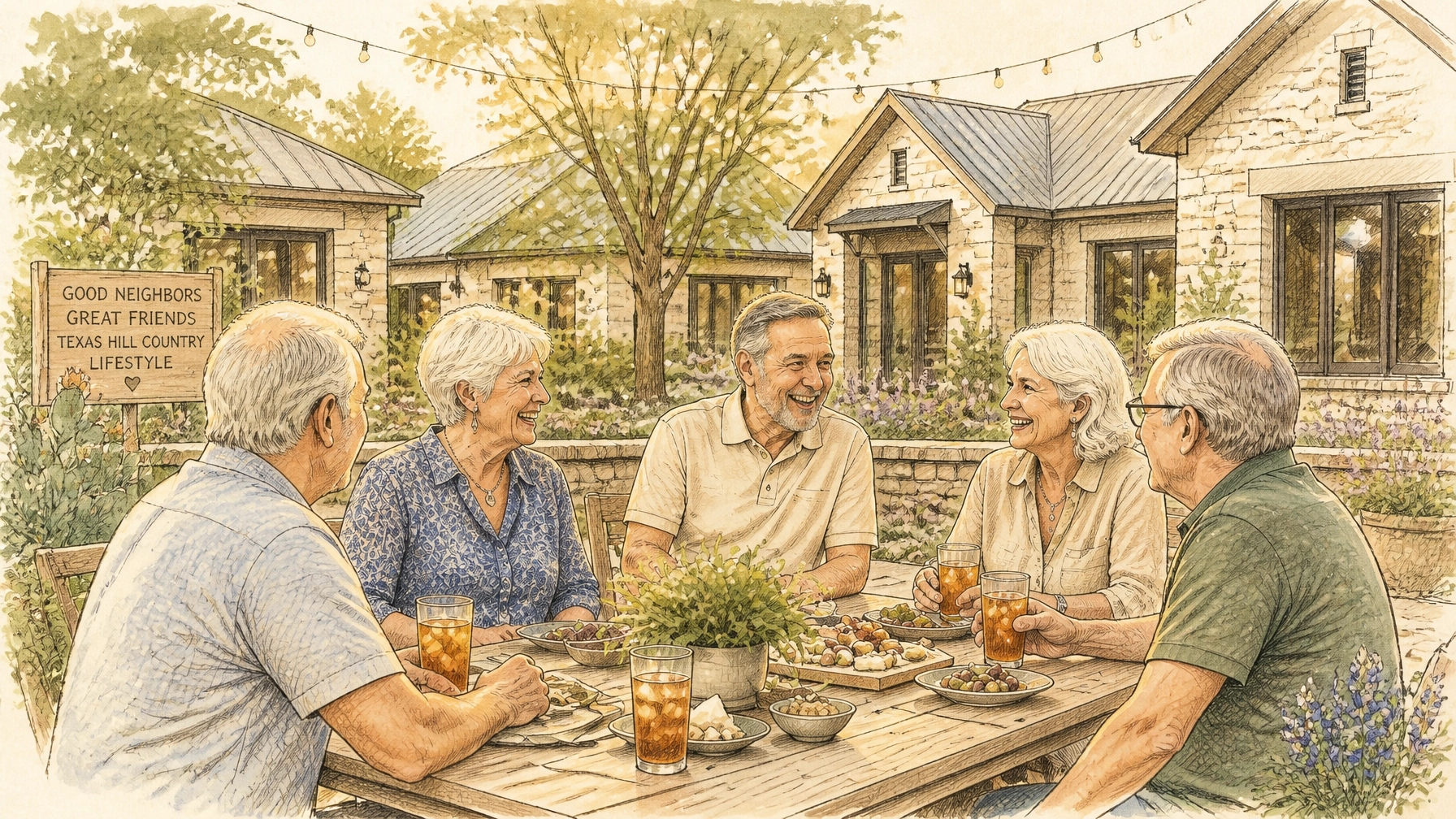
For decades, the "American Dream" of retirement was often pictured as a quiet house at the end of a cul-de-sac, perhaps with a white picket fence and a very large, very high-maintenance lawn. But as we move into the late 2020s, a new trend is taking root in the heart of the Texas Hill Country, one that swaps the isolated cul-de-sac for a front porch and a shared garden.
Welcome to the world of co-housing and shared living, a concept that is quickly becoming one of the most talked-about trends for those looking to retire in New Braunfels, TX.
If you’ve spent any time exploring the best neighborhoods for retirees in our neck of the woods, you know that New Braunfels has a unique charm. It’s a blend of German heritage, river-lifestyle relaxation, and a growing list of luxury retirement options. But for many, the true appeal of the Hill Country isn't just the scenery; it’s the community. And that is exactly what co-housing is designed to maximize.
What Exactly is Co-Housing? (And No, It’s Not a Dorm)
When people hear "shared living," their minds often jump to two extremes: a college dormitory or a traditional assisted living facility. Co-housing is neither.
Think of co-housing as an intentional neighborhood. It’s a community of private, fully-equipped homes (your own kitchen, your own bedroom, your own "me-time" space) that are clustered around a shared common house or central green space. Residents typically manage the community themselves, sharing occasional meals, gardening duties, and: most importantly: a sense of belonging.
While formal co-housing cooperatives are still emerging in Central Texas, the spirit of this movement is already alive and well in several New Braunfels retirement communities. Whether it’s through "cottage-style" developments or active adult neighborhoods with high-engagement clubhouses, the goal is the same: to trade isolation for connection.

Why New Braunfels is the Perfect Backdrop for Shared Living
There’s a reason New Braunfels is consistently ranked among the best places to retire in Texas. It’s not just the absence of state income tax (though we certainly aren't complaining about that!). It’s the lifestyle.
New Braunfels has always been a "social" town. Between Wurstfest, the Landa Park excursions, and the constant hum of live music in Gruene, this is a place where people actually talk to their neighbors.
1. Curing the "Social Isolation" Epidemic
Research has shown that social isolation can be as damaging to health as smoking 15 cigarettes a day. In a traditional suburban home, it’s easy to go days without a meaningful conversation. In a co-housing or shared-living environment, connection is "baked in" to the architecture. You don't have to schedule a "playdate" with a friend; you just walk to the mailbox or the community garden.
2. The Shared Resource Advantage
Why does every house on the block need its own industrial-sized lawnmower, power washer, and guest suite that only gets used twice a year? In shared-living communities, these resources are often centralized. This doesn't just save money; it reduces the mental load of home maintenance: something every retiree can appreciate.
3. Safety in Numbers
There is a profound peace of mind that comes from knowing your neighbors are looking out for you. Whether it’s someone noticing your car hasn't moved in a few days or having a friend nearby to help with a heavy box, the "mutual aid" aspect of co-housing is a powerful safety net.
Local Interpretations of the Trend
While you might not find a sign that says "Official Co-Housing Cooperative" yet, several active adult oases in New Braunfels are leading the way with this philosophy.
- Emerald Cottages of New Braunfels: These aren't your typical apartments. They are private, maintenance-free cottages designed with a "neighborhood" feel. The community clubhouse acts as the heart of the development, fostering the kind of social interaction that defines shared living.
- Rio Terra Senior Living: Offering independent living cottages within a luxury gated setting, Rio Terra blends the privacy of a home with chef-prepared meals and a calendar full of social events. It’s for the retiree who wants the community of co-housing without the DIY management requirements.
- Larkspur at Creekside: Focused on the 55+ active adult, this community emphasizes "vibrant connection." It’s designed for those who want to be in the middle of the action, close to shopping and dining, but with a built-in social network at their doorstep.

The Financial Transition: From Big House to Better Living
As a retirement planner, I often see the "Co-Housing Conversation" start with a desire for lifestyle change and end with a list of financial questions. Moving into a community like this often involves downsizing from a long-time family home: a move that can be both emotionally and financially complex.
At Mau Sanchez Capital, we specialize in helping families navigate these major life transitions. Moving to a shared-living community isn't just about picking a floor plan; it’s about ensuring your retirement income strategy supports this new chapter.
"Retirement isn't the end of your story; it's the beginning of the chapter where you finally get to choose your co-stars." : Mau Sanchez
When transitioning to a community-focused lifestyle, we emphasize:
- Liquidity Management: Ensuring you have the cash flow needed for community fees without disrupting your long-term growth.
- Asset Allocation: Constructing a portfolio of transparent, publicly traded securities that provides the stability needed for a fixed-cost living environment.
- Fiduciary Guidance: As fiduciaries, we look at the "big picture" of your wealth, ensuring your move into a New Braunfels retirement community aligns with your legacy goals.

Is Shared Living Right for You?
Co-housing and its modern interpretations are perfect for the retiree who is "socially curious." If you find yourself dreading the isolation of a large, empty house or if you simply want to spend more time doing and less time maintaining, this might be your perfect fit.
The rise of these communities in New Braunfels proves that we are moving toward a more connected, intentional way of aging. It’s about more than just a roof over your head; it’s about the people who live under the roofs next to you.
Ready to Explore Your Options?
If you’re considering a move to the Texas Hill Country and want to ensure your financial house is as sturdy as your new cottage, let’s talk. At Mau Sanchez Capital, we help retirees turn their vision of a community-focused retirement into a concrete financial reality.
Schedule a private meeting with a fiduciary financial advisor today by calling (512) 593-8380 or by visiting: https://calendly.com/portafoliocapital/15min
Disclaimer:
Portafolio Capital Management dba Mau Sanchez Capital is a Registered Investment Adviser. This content is for informational purposes only and does not constitute investment advice or a solicitation to buy or sell any security. Advisory services are provided only pursuant to a written advisory agreement. Please consult with a qualified CPA or estate attorney for specific tax or legal advice.
This article may include stories, scenarios, and perspectives created or assisted by artificial intelligence. Although the individuals and circumstances described may be fictional, the topics are intended to reflect real financial, personal, and lifestyle issues that retirees and individuals commonly face.
The content is provided to encourage readers to consider different perspectives that may affect their retirement, regardless of whether they are currently planning, approaching retirement, or already retired. It is intended for general educational and informational purposes only and should not be interpreted as personalized investment, financial, tax, legal, medical, or retirement-planning advice.
Individual circumstances vary. Readers should independently verify any information presented and consult appropriately qualified professionals before making financial or personal decisions. No advisory, professional, or client relationship is created through the use of this website.
Leave a Reply