
So, you’re thinking about making the leap. You’ve seen the photos of Gruene Hall, heard about the legendary floating trips down the Comal, and perhaps you’ve even started browsing those stunning luxury Hill Country homes. But then a question pops into your head: “What is the weather actually like there?”
If you’re coming from the Midwest, you’re probably dreaming of never shoveling snow again. If you’re coming from the West Coast, you might be wondering if "Texas heat" is a myth or a lifestyle. The truth is, moving to New Braunfels for retirement means trading your snow blower for a high-quality HVAC system and a very good pair of sunglasses.
In this guide, we’re going to break down the four seasons of New Braunfels, how to handle the "spicy" summers, and what you need to know about storm season so you can retire in New Braunfels TX with total confidence.
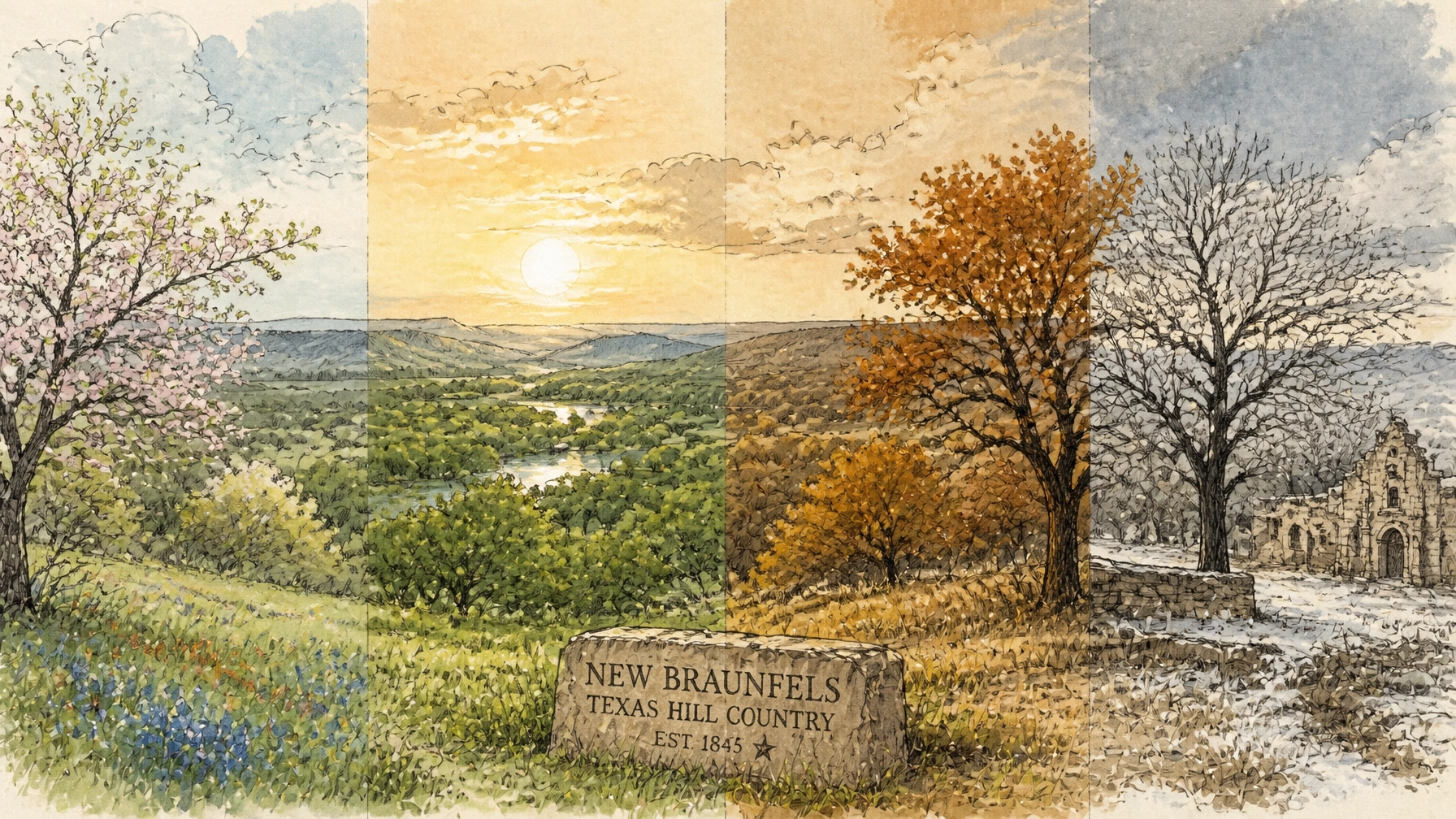
The Seasonal Rhythm of the Hill Country
New Braunfels doesn't exactly follow the "four distinct seasons" calendar you might find in Vermont. Instead, we have a unique rhythm that revolves around the rivers, the festivals, and the occasional "Blue Norther."
Summer: The Season of the River
Let’s address the elephant in the room: Texas summers are hot. From June through August (and let’s be honest, often through September), you can expect temperatures in the 90s, with August frequently hitting that triple-digit mark.
However, there is a reason retirees flock here despite the heat. The cost of living in New Braunfels TX often includes the "lifestyle tax" of a slightly higher summer utility bill, but it’s balanced by the fact that you can spend your afternoons chest-deep in the spring-fed 72-degree waters of the Comal River.
Pro-tip for retirees: The locals know to do their gardening, golfing, or walking at Landa Park before 10:00 AM. After that, it’s all about the "AC and Sweet Tea" lifestyle until the sun begins to dip.

Fall: The Real "Grand Opening"
If you ask anyone who has lived here for a while, they’ll tell you that Fall is the best time of year. As the temperatures drop into the 70s and 80s in October, the city comes alive. This is the season of Wurstfest, outdoor dining in Downtown New Braunfels, and long drives through the Hill Country to see the subtle but beautiful change in the cypress trees along the river.
Winter: Short, Sweet, and Mostly Sunny
Winter in New Braunfels is why people choose to retire in New Braunfels TX. While the rest of the country is gray and slushy, we’re often enjoying 60-degree days and clear blue skies. We do get the occasional freeze, and once every few years, a light dusting of "Texas snow" (which usually melts by noon), but for the most part, winter is mild and manageable.

Spring: The Bluebonnet Explosion
Spring is arguably the most beautiful season in Central Texas. Starting in March, the roadsides transform into a sea of blue and red as the Bluebonnets and Indian Paintbrushes bloom. It’s the perfect time to explore the best hiking and biking trails in Comal County.

Navigating Storms and "Hill Country Weather"
While the weather here is mostly sunshine and rainbows (literally, after a good rain), retirees should be aware of a few regional quirks.
1. The "May and October" Rain
Statistically, May and October are our wettest months. In the Hill Country, rain can come in the form of intense thunderstorms. Because of our limestone terrain, flash flooding can happen quickly in low-lying areas. When searching for your perfect active adult oasis, it’s always a good idea to chat with your realtor about the specific elevation and drainage of the property.
2. Humidity: The "Wet" Heat
Unlike the desert heat of Arizona, New Braunfels has a "humid subtropical" climate. This means the air can feel heavy in the summer. For many retirees, this is actually preferred over dry heat as it’s better for the skin and respiratory system, but it does mean you’ll want to prioritize homes with modern, efficient climate control.
3. Hail and High Winds
Every few years, a spring storm might bring a bit of hail. It’s part of the trade-off for having 300 days of sunshine. Most modern homes in the area are built with durable roofing materials designed to withstand these brief bursts of Texas excitement.
"The weather in New Braunfels isn't just a backdrop; it's the conductor of our lifestyle. You learn to live with the sun, play in the water, and appreciate the cool breeze of a November evening." , Mau Sanchez, Principal at Mau Sanchez Capital
Preparation Tips for Your Move
If you’re planning your relocation, here are a few practical steps to prepare for the Texas climate:
- Service Your HVAC: Before the July heat hits, ensure your cooling system is in top shape.
- Insulate Your Pipes: Even though it rarely freezes, a "hard freeze" can happen once or twice a year. Knowing how to wrap your outdoor faucets is a "local" skill you’ll learn quickly.
- Stay Hydrated: It sounds simple, but the Texas sun is stronger than you think. Always keep a water bottle handy when you're out exploring.
- Financial Planning for the "Summer Surge": While Texas has fantastic tax advantages for retirees (which we highly recommend discussing with your CPA), your monthly budget should account for higher electricity usage in the summer months.
Beyond the Thermometer: A Financial Perspective
At Mau Sanchez Capital, we specialize in helping families navigate the financial transitions of relocating to Central Texas. While we love talking about the weather and the best spots for a sunset glass of wine, our core focus is ensuring your retirement portfolio is as resilient as a Hill Country oak tree.
Moving to New Braunfels for retirement involves more than just picking a neighborhood; it involves retirement income planning, wealth preservation, and aligning your investments with your new lifestyle. We focus on transparent, liquid, and publicly traded markets to ensure you have the liquidity you need to enjoy everything this region has to offer, whether that’s a new golf club membership or a boat for the lake.

Final Thoughts
The weather in New Braunfels is a huge part of the "small-town charm" that brings people here. It invites you to be active, to be outdoors, and to slow down. Yes, it gets hot, and yes, it occasionally storms, but the trade-off is a life lived in one of the most beautiful corridors in the United States.
Ready to make your move? Whether you're still in the research phase or you've already started packing the boxes, we're here to help the transition go smoothly.
Schedule a private meeting with a fiduciary financial advisor today by calling (512) 593-8380 or by visiting: https://calendly.com/portafoliocapital/15min
Portafolio Capital Management dba Mau Sanchez Capital is a Registered Investment Adviser. This content is for informational purposes only and does not constitute investment advice or a solicitation to buy or sell any security. Advisory services are provided only pursuant to a written advisory agreement. Please consult with a qualified CPA or estate attorney for specific tax or legal advice.
This article may include stories, scenarios, and perspectives created or assisted by artificial intelligence. Although the individuals and circumstances described may be fictional, the topics are intended to reflect real financial, personal, and lifestyle issues that retirees and individuals commonly face.
The content is provided to encourage readers to consider different perspectives that may affect their retirement, regardless of whether they are currently planning, approaching retirement, or already retired. It is intended for general educational and informational purposes only and should not be interpreted as personalized investment, financial, tax, legal, medical, or retirement-planning advice.
Individual circumstances vary. Readers should independently verify any information presented and consult appropriately qualified professionals before making financial or personal decisions. No advisory, professional, or client relationship is created through the use of this website.
Leave a Reply