
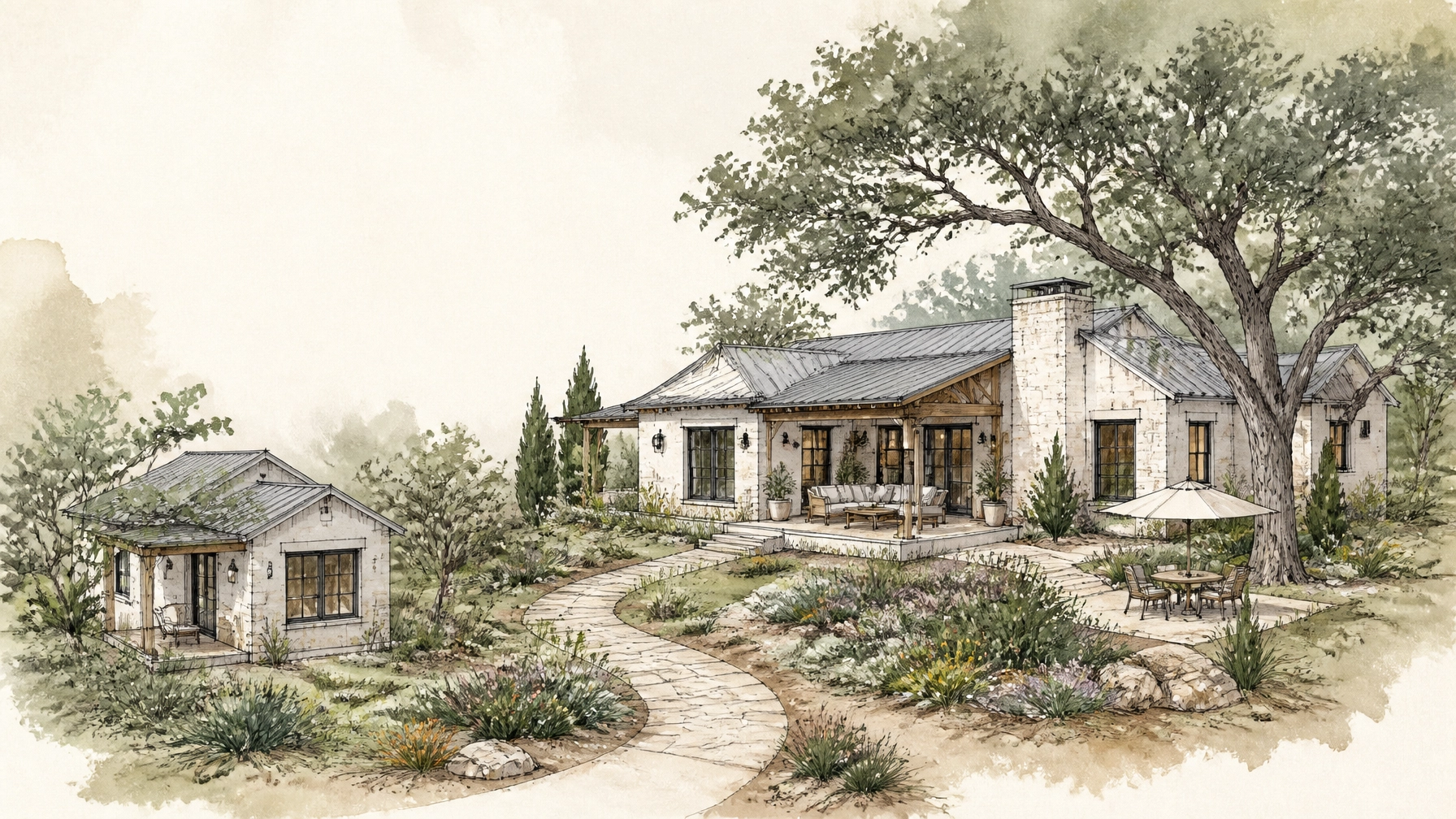
Retirement can bring families closer together: sometimes literally. Adult children may want to be nearby as parents age. Grandparents may enjoy having family close enough for Sunday dinners, school pickups, or an impromptu glass of iced tea. At the same time, everyone may still value a little breathing room.
That is where two possibilities often enter the conversation:
- Adding an accessory dwelling unit, or ADU, such as a detached guest cottage or casita
- Moving closer to family, either into the same household or into a nearby home
Neither option is automatically better. The right choice depends on privacy, accessibility, maintenance tolerance, family expectations, the property itself, and how much change everyone is ready to manage.
This is a lifestyle comparison: not legal, construction, tax, or real-estate advice. For property-specific questions, consult local planning officials and qualified professionals.
First, What Is an ADU?
An accessory dwelling unit is a smaller residential space located on the same lot as a primary home. It may be attached to the main residence, incorporated into a garage, or built as a detached cottage.
The City of New Braunfels’ public draft Land Development Ordinance describes accessory structures as uses that are “customarily incidental, appropriate, and subordinate” to the primary use of a property. The draft also discusses ADUs, including detached guest houses and garage apartments.
That document is a useful starting point: not a substitute for checking current requirements. Rules, interpretations, and permitting procedures can change. Anyone exploring an ADU should contact the City of New Braunfels Planning Services department before making decisions.
An ADU arrangement is also distinct from buying a duplex, choosing a townhome, or joining a co-housing community. The central idea here is one primary property shared by a family arrangement, with a separate living space that may offer more independence.
Privacy: Close Enough Without Being Too Close
Privacy is often the biggest reason families consider an ADU.
A detached cottage can provide:
- A separate entrance
- Its own bedroom and bathroom
- A private sitting area
- A small kitchen or kitchenette, depending on applicable requirements
- A clearer separation between family time and personal time
That separation can make everyday relationships more comfortable. Family members may be close enough to help, but they do not have to share every meal, television program, or morning routine. In multigenerational living, a little distance can be a very good thing.
Moving into the same home creates a different experience. It may offer the most immediate connection, but privacy depends almost entirely on the floor plan and the household’s communication habits. A nearby home: perhaps in the same neighborhood: may preserve more independence while still allowing frequent visits.
The key question is not simply, “Do we love each other enough to live together?” Most families do. A better question is, “What amount of togetherness will help us enjoy one another for the long term?”

Accessibility: Designing for the Years Ahead
An ADU may allow a family to think about accessibility before it becomes urgent.
A thoughtfully planned cottage could include:
- A single-level layout
- A gently sloped walkway
- A no-step or low-threshold entry
- Wider doorways
- An easy-to-use bathroom
- Good lighting along paths and entrances
- Convenient access to parking
These features are not only for someone who currently needs assistance. They can make a home more comfortable for visitors, reduce tripping concerns, and support changing needs over time.
Moving closer to family may involve an existing home with stairs, narrow hallways, distant bathrooms, or a bedroom located far from the main living area. Some homes can be adapted, but the possibilities may be limited by the existing structure.
On the other hand, moving into a nearby, newer home may offer modern accessibility features without the disruption of building on an established property. This is one reason it helps to compare actual homes and actual lots rather than debating the concepts in the abstract.
A useful exercise is to imagine an ordinary Tuesday ten years from now. Where would you park? How far would you walk to the bathroom? Could you carry groceries inside comfortably? Would a visiting family member have a convenient place to stay?
Maintenance: One Home or Two?
An ADU can reduce the feeling of crowding, but it adds another structure to care for.
Even a small cottage may involve additional:
- Roofing and exterior upkeep
- Heating and cooling systems
- Plumbing and electrical systems
- Cleaning and repairs
- Landscaping and irrigation
- Insurance questions
- Utility coordination
New construction may mean fewer immediate repairs, but “new” does not mean “maintenance-free.” The main home and cottage still sit on the same property, and someone must coordinate upkeep.
Moving closer to family may simplify things if it allows a household to sell a larger home and maintain one smaller residence. It may also create new responsibilities if several people share the same house or if one family member becomes the default person for repairs and household decisions.
Before choosing either path, talk honestly about who will handle maintenance, how often professional help might be used, and what happens if one household’s ability to contribute changes.
Design: The Little Details Matter
The success of a multigenerational arrangement often depends less on square footage than on thoughtful design.
For an ADU, consider the relationship between the two homes:
- Is the cottage visible from the primary home?
- Does it have a private entrance?
- Is there a comfortable shared outdoor area?
- Can family members visit without crossing someone else’s living space?
- Is the path between homes well lit and easy to navigate?
- Will windows, patios, or balconies face directly into one another?
A garden path can connect two households without making them feel like one large household. Landscaping, shade, seating areas, and lighting can help define shared and private zones.
If moving into the same home, design questions become even more important. Could each adult household have a private retreat? Is there enough storage? Can people host guests without disrupting everyone else? Is there a quiet place for reading, working, or simply enjoying a cup of coffee without commentary from the peanut gallery?
Zoning and Permitting Questions
An ADU is not simply a shed with a bed in it. The property may be subject to zoning, setback, parking, utility, building-code, floodplain, easement, or neighborhood restrictions.
The City of New Braunfels’ public draft materials discuss ADU considerations such as location, parking, size, setbacks, access, and design requirements. However, readers should confirm current standards directly with the city. The City’s Planning Services page is a practical place to begin.
Ask local officials and qualified professionals questions such as:
- Is the property inside New Braunfels city limits, or does another jurisdiction apply?
- Does the current zoning allow the proposed use?
- Are there recorded easements, deed restrictions, or neighborhood rules to review?
- Can the lot accommodate the structure, parking, and required access?
- What permits, inspections, and utility approvals may be required?
- Are there floodplain, drainage, historic-district, or environmental considerations?
- Would a future rental or short-term occupancy plan involve additional restrictions?
The City maintains a separate Short Term Rentals page, which is a reminder not to assume that a guest cottage can automatically be used for every purpose a family imagines.
Cost Variables Without the False Precision
The cost comparison is rarely as simple as “building versus moving.”
For an ADU, variables may include:
- Design and professional fees
- Site preparation
- Construction materials and labor
- Utility connections
- Permits and inspections
- Landscaping and drainage work
- Furnishings and accessibility features
- Ongoing maintenance and insurance
For moving closer to family, variables may include:
- The price of the new home
- Preparing or selling the current home
- Moving and storage
- Remodeling
- Property taxes and insurance
- Transportation needs
- Community fees or service arrangements
There may also be emotional costs. Building can bring months of decisions, delays, and dust. Moving can mean leaving a familiar home, neighborhood, or social routine.
At Mau Sanchez Capital, we help families think about how a housing decision may relate to broader retirement planning conversations, including cash flow, ongoing housing costs, and the importance of keeping portfolios liquid, transparent, and aligned with long-term goals. A fiduciary advisor can help organize the financial questions, while a qualified CPA, estate attorney, builder, architect, or real-estate professional can address matters within their own specialties.

Family Expectations: The Conversation That Comes Before the Blueprint
Before anyone draws a floor plan, discuss expectations.
Topics worth addressing include:
- How often will family members spend time together?
- Is the arrangement intended to be permanent or flexible?
- Who will provide transportation or practical help?
- What happens if someone needs more care later?
- Will grandchildren or other relatives stay overnight?
- How will shared expenses be handled?
- Who makes decisions about the property?
- What happens if one household wants to move?
It can help to write down the answers. Not because every family conversation needs a contract, but because vague expectations tend to become very specific disagreements later.
A family may discover that an ADU is ideal for privacy but difficult for the lot. Another may realize that moving nearby offers the right balance of independence and support. A third may decide that occasional extended visits are enough and that no major housing change is needed yet.
There is no prize for choosing the most complicated arrangement.
Which Option Fits Your Retirement?
An ADU may be worth exploring if you want:
- Daily proximity with separate living spaces
- A chance to design for accessibility
- Shared outdoor space without a shared interior
- Flexibility for family visits or future household changes
- A long-term home base in the New Braunfels area
Moving closer to family may be more appealing if you want:
- Less construction and permitting complexity
- A simpler maintenance arrangement
- The freedom to choose a different neighborhood
- More flexibility to right-size your home
- A clean separation between households
For anyone considering a move to the Hill Country, our guide on moving to New Braunfels in your 60s offers additional lifestyle questions to consider.
The best multigenerational retirement arrangement is the one that supports both connection and independence. In other words, build a bridge: not a pressure cooker.
At Mau Sanchez Capital, we help families think through the financial transitions that can accompany a retirement move, including how housing decisions may influence household expenses, available liquidity, and long-term portfolio planning. To learn more, visit Portafolio Capital Management dba Mau Sanchez Capital.
Schedule a private meeting with a fiduciary financial advisor today by calling (512) 593-8380 or by visiting: https://calendly.com/portafoliocapital/15min
Portafolio Capital Management dba Mau Sanchez Capital is a Registered Investment Adviser. This content is for informational purposes only and does not constitute investment advice or a solicitation to buy or sell any security. Advisory services are provided only pursuant to a written advisory agreement.
This article may include stories, scenarios, and perspectives created or assisted by artificial intelligence. Although the individuals and circumstances described may be fictional, the topics are intended to reflect real financial, personal, and lifestyle issues that retirees and individuals commonly face.
The content is provided to encourage readers to consider different perspectives that may affect their retirement, regardless of whether they are currently planning, approaching retirement, or already retired. It is intended for general educational and informational purposes only and should not be interpreted as personalized investment, financial, tax, legal, medical, or retirement-planning advice.
Individual circumstances vary. Readers should independently verify any information presented and consult appropriately qualified professionals before making financial or personal decisions. No advisory, professional, or client relationship is created through the use of this website.
Leave a Reply